

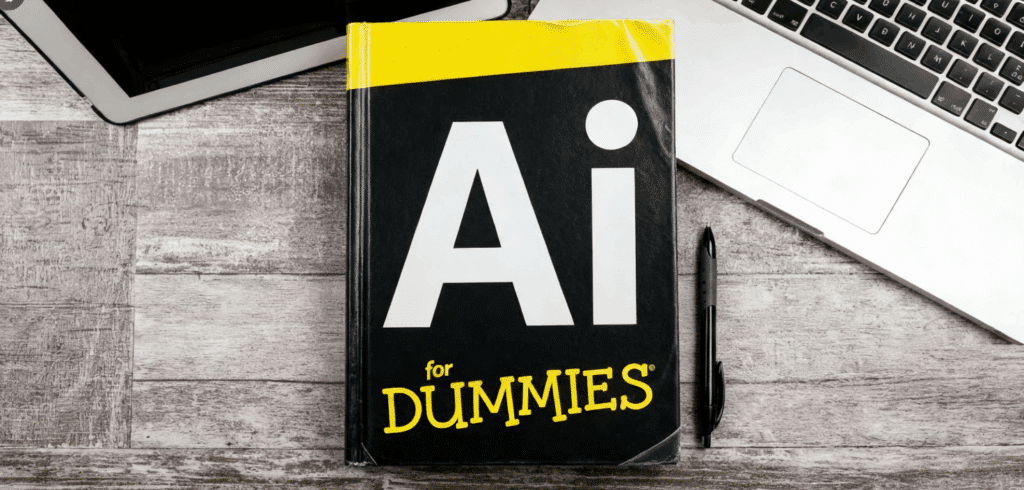
If you’ve spent the last year hearing about ChatGPT, AI agents, automation, and machine learning but still have no idea what any of it actually means or which one your business needs, you’re not alone. The AI landscape has become a confusing mess of buzzwords, overlapping concepts, and vendors promising miracles with technology you don’t understand.
Here’s the truth: most business owners don’t need to become AI experts. But you do need to understand the fundamental differences between these tools so you can make smart decisions about where to invest your time and money. The good news? Once you strip away the jargon, the distinctions are surprisingly simple and the right choice for your business becomes obvious.
In this guide, we’ll break down exactly what ChatGPT, AI agents, and automation actually are, show you concrete examples of what each does best, and give you a clear framework for deciding which technology solves your specific problems. No technical background required—just common sense and a willingness to see through the hype.
Understanding ChatGPT: Your Conversational AI Assistant
ChatGPT is essentially a very sophisticated chatbot that understands and generates human-like text. Think of it as having a conversation with someone who has read most of the internet and can write coherent, contextual responses to almost any question or prompt you give it. You type something in, it analyzes what you’re asking, and it generates a relevant response based on patterns it learned from massive amounts of text data.

Image: Close view of a person with opened AI chat on laptop.
The keyword here is “conversational.” ChatGPT excels at back-and-forth dialogue where you’re exploring ideas, drafting content, or getting information. Need to write a customer email but struggling with the tone? ChatGPT can draft multiple versions in seconds. Want to brainstorm marketing campaign ideas? It’ll generate twenty options while you finish your coffee. Trying to understand a complex concept? It can explain it at whatever level of detail you need.
However, ChatGPT has essential limitations that many beginners don’t realize. It can’t actually do anything beyond generating text in the chat window. It won’t send emails, update your spreadsheets, schedule appointments, or connect to your business systems. It’s purely conversational—beneficial for thinking and writing, but it stops at the keyboard. Every action you want to take based on its suggestions still requires you to copy, paste, and execute in other tools manually.
This is where many businesses get stuck. They start using ChatGPT, get excited about the possibilities, and then realize they’re spending hours copying AI-generated content into various systems, wondering why their efficiency hasn’t dramatically improved. Understanding this limitation is crucial for knowing when ChatGPT is the right tool and when you need something more capable.
Decoding AI Agents: Intelligence That Takes Action
AI agents represent the next evolution beyond conversational AI. While ChatGPT can tell you what to do, AI agents can actually do it for you. An agent combines the conversational understanding of tools like ChatGPT with the ability to take actions, access information from multiple sources, and complete tasks autonomously within defined parameters.

Image: Workflow showing an AI agent receiving requests, interacting with tools, completing tasks, and reporting results.
Think of the difference this way: if you ask ChatGPT, “What’s on my calendar tomorrow?”, it will tell you it can’t access your calendar. Ask an AI agent the same question, and it will actually check your Google Calendar, read your schedule, and tell you specifically what meetings you have. Even better, you could ask the agent, “Reschedule my 2 pm meeting to Thursday and send apologies to the attendees,” and it would actually make those changes and send those emails.
AI Customer Agents are transforming how businesses handle repetitive but judgment-based tasks. A customer service agent can read incoming support tickets, understand what customers are asking, check order status in your database, consult your return policy documents, and compose personalized responses—all without human intervention for straightforward requests. The agent only escalates to humans when situations require empathy, complex decision-making, or handling exceptions outside its instructions.
The technology enabling this is called “function calling” or “tool use.” You give the agent access to specific functions (like “send email,” “update CRM,” “check inventory”), and it decides when to use them based on its understanding of what you’re asking it to accomplish. This makes agents incredibly powerful but also requires a more sophisticated setup than just opening ChatGPT and typing. You’re essentially building a custom AI employee with specific responsibilities and access to particular systems.
See AI Agents in Action?
Discover how AI agents can qualify leads, answer customer questions, and handle routine tasks 24/7 without expanding your team.
Demystifying Automation: The Reliable Recipe Follower
Traditional automation is conceptually the simplest of these three technologies, though it can become technically complex in implementation. Automation follows predetermined rules and sequences without deviation. If this happens, then do that—every single time, exactly the same way. There’s no interpretation, no decision-making, no adapting to context. It’s digital consistency at its finest.
Consider a typical business automation: when a customer fills out your contact form, the automation captures that data, creates a new contact in your CRM, sends a welcome email with specific information, notifies your sales team in Slack, and creates a follow-up task scheduled for three days later. This sequence executes identically whether it’s the first customer or the thousandth, at 3am on Sunday or noon on Tuesday.
| Business Area | Manual Process | Automated Solution |
|---|---|---|
| Sales | Copy lead info from forms to CRM manually | Form submission automatically creates CRM contact with tags |
| Finance | Download invoices, rename files, upload to accounting | Invoices automatically sync to accounting software with proper categorization |
| Customer Service | Forward support emails to appropriate team member | Emails automatically routed based on keywords and customer history |
| Marketing | Manually send follow-up emails after events | Attendees automatically enter email sequence with personalized content |
| Operations | Update multiple spreadsheets with same data | Data entry in one system automatically updates all connected sheets |
Table: Automation Examples Across Business Functions.
The power of automation lies in its reliability and scalability. Once you build a workflow correctly, it never forgets a step, never gets tired, and handles one task or one thousand tasks with identical accuracy. This makes automation perfect for repetitive processes with clear logic where the same inputs should always produce the same outputs. Many businesses discover tremendous value by implementing 10 fundamental automations that eliminate hours of mundane work each week.
The limitation? Automation struggles with anything requiring judgment, interpretation, or handling unexpected variations. If a customer submits a form with incomplete information, the automation might fail or create a mess in your CRM. If an invoice arrives in an unexpected format, the automated categorization might misclassify it. Traditional automation needs humans to handle exceptions and edge cases that don’t fit the predetermined rules.
The Comparison You Actually Need: Which Technology Solves What
Now that you understand each technology individually, let’s address the practical question: which one should you use for your specific business challenges? The answer almost always depends on the nature of the task, not the complexity of your business or the size of your team.
| Capability | ChatGPT | AI Agents | Automation |
|---|---|---|---|
| Understands natural language | ✅ Excellent | ✅ Excellent | ❌ Requires structured input |
| Generates creative content | ✅ Excellent | ✅ Good | ❌ Can only use templates |
| Takes action in business systems | ❌ No | ✅ Yes | ✅ Yes |
| Handles unexpected variations | ✅ Very good | ✅ Good | ❌ Struggles with exceptions |
| Works 24/7 without supervision | ⚠️ Requires user input | ✅ Yes | ✅ Yes |
| Setup complexity | ⭐ Very simple | ⭐⭐⭐ Moderate | ⭐⭐ Simple to moderate |
| Ongoing maintenance | None | ⭐⭐ Regular monitoring | ⭐⭐⭐ Updates when systems change |
| Cost structure | Subscription ($20/mo) | Usage-based (variable) | Per-execution or flat rate |
| Best for… | Thinking, writing, exploring | Judgment-based repetitive tasks | Rule-based repetitive tasks |
Table: Comparison of manual business processes versus automated solutions across sales, finance, customer service, marketing, and operations.
Use ChatGPT when you need help with cognitive work that ends with you taking action elsewhere. Writing, brainstorming, analyzing, explaining, summarizing—these are ChatGPT’s sweet spot. It’s perfect for one-off tasks or situations where you need intelligence but not execution. The business owner drafting a difficult client email, the marketer exploring campaign concepts, or the manager trying to understand a complex report all benefit enormously from ChatGPT without needing anything more sophisticated.
Choose AI agents when tasks require both understanding and action, especially when dealing with unstructured input from customers or team members. Customer support, lead qualification, document processing, and personalized communication all benefit from agents that can interpret intent, access necessary information, and complete appropriate actions. Our LeadQualify Agent demonstrates this perfectly—engaging prospects in natural conversation while automatically qualifying them and routing promising leads to your sales team.
Deploy automation when you have repetitive processes with clear steps and predictable inputs. Data synchronization, report generation, notification systems, and workflow triggers all work beautifully with traditional automation. If you can describe the process as “when X happens, always do Y, then Z,” automation delivers reliable, cost-effective execution. The key is ensuring your processes are actually standardized—trying to automate chaotic or inconsistent workflows usually creates more problems than it solves.
Not Sure Where to Start?
Download our free guide showing the 10 most impactful automations for small and medium businesses, with realistic implementation timelines and expected ROI.

The Beginner’s Biggest Mistake (And How to Avoid It)
After working with hundreds of businesses implementing AI and automation, we’ve identified the single most common mistake beginners make: trying to force the wrong technology onto their problem. Someone hears about AI, gets excited, and tries to make ChatGPT run their entire business. Or they invest in complex automation for tasks that actually require human judgment. The technology isn’t wrong—the application is incorrect.
The solution is surprisingly simple: start with your problem, not with the technology. Don’t ask “How can I use AI?” Instead, ask “What specific task is consuming disproportionate time and could be handled more efficiently?” Describe that task in detail, including what varies and what stays consistent, what requires judgment and what follows rules, what happens occasionally versus constantly.
Once you’ve clearly defined the problem, the right technology often becomes obvious. Does it require creative or interpretive thinking but no actual execution? That’s ChatGPT territory. Does it need both understanding and action, especially with unpredictable inputs? Consider AI agents. Is it a repetitive process with consistent steps and clear logic? Traditional automation wins. Many scenarios benefit from combining multiple technologies, where businesses often find they need guidance from experts who understand how these pieces fit together.
Another critical mistake is expecting perfection immediately. Your first automation will probably have bugs. Your first AI agent will occasionally misunderstand instructions. ChatGPT will sometimes generate content that misses the mark. This is normal. Technology implementation is iterative—you start simple, learn from what doesn’t work, refine your approach, and gradually expand to more sophisticated applications. The businesses that succeed with AI and automation are those that embrace this learning process rather than demanding flawless execution from day one.
Making Your First Move: Practical Next Steps for AI Beginners
If you’ve read this far, you’re probably wondering what specific action you should take next. The good news is that starting with AI and automation doesn’t require massive investment, complete business transformation, or technical expertise you don’t have. Begin with one small, contained project that solves a real problem and delivers measurable results within weeks, not months.
For most businesses, the ideal first project involves ChatGPT because it requires zero technical setup and costs just $20 monthly. Identify one writing or thinking task that consumes significant time—perhaps drafting client proposals, creating email responses, or analyzing customer feedback. Spend two weeks experimenting with ChatGPT for this specific task, learning how to prompt it effectively and where it adds genuine value. This builds your intuition for how AI thinks and where its limitations appear.
Once you’re comfortable with conversational AI, examine your repetitive processes to identify automation opportunities. Look for tasks you do the same way every time, especially those involving moving data between systems or triggering actions based on specific events. Many businesses discover enormous value from simple automations that connect their existing tools and eliminate manual data entry. Start with one workflow, prove the value, then expand systematically.
AI agents typically represent your third step rather than your first. After you understand both conversational AI and traditional automation, you’ll recognize situations where the two need to merge—where tasks require both intelligence and execution. This is when exploring AI customer agents or lead qualification systems makes sense. These implementations deliver remarkable ROI but benefit tremendously from the understanding you’ve developed through simpler projects first.
Moving Forward: Your AI and Automation Roadmap
Understanding the difference between ChatGPT, AI agents, and automation represents just the beginning of your journey, not the destination. The real value comes from strategically applying these technologies to eliminate friction in your operations, free your team from soul-crushing repetition, and create work capacity that actually moves your business forward.
The businesses seeing the strongest results don’t choose one technology and ignore the others. They build a technology stack where each tool handles what it does best. ChatGPT supports thinking and creativity. Automation ensures reliable execution of standardized processes. AI agents bridge the gap, bringing intelligence to tasks that require both understanding and action. This integrated approach transforms operations more effectively than any single technology alone.
Remember that you’re not alone in feeling overwhelmed by these options. Every business leader navigating AI and automation faces the same confusion, encounters the same learning curve, and makes some of the same mistakes along the way. The difference between those who successfully transform their operations and those who abandon the effort usually comes down to starting small, learning continuously, and knowing when to seek guidance from people who’ve implemented these technologies dozens of times before. Your job isn’t to become an AI expert—it’s to recognize opportunities, make informed decisions, and focus on outcomes rather than technology for its own sake.


