
Most companies celebrate the day automation goes live. The workflow runs, emails send themselves, leads route automatically. Someone on the team probably uses the word “game-changer.”
Three months later? Half those workflows are quietly broken.
This is the automation truth nobody talks about. The guides, the webinars, the LinkedIn posts — they’re all about getting started. Almost nothing covers what happens after. And that gap is exactly where automation investments go to die.
I’ve seen it happen a lot. A business spends time and money setting up smart workflows. They reclaim hours, reduce errors, feel the ROI. Then life gets busy, the workflows get ignored, and one day a client doesn’t get their onboarding email — and nobody notices for two weeks.
Automation isn’t “set and forget.” It never was. But if you build the right habits around maintaining, measuring, and scaling your systems, those workflows keep paying you back for years.
Why Automation Breaks (and When It Happens)
Automation fails for a few predictable reasons, and almost none of them happen on day one.
| Failure Type | What Happens | When It Typically Occurs |
|---|---|---|
| API changes | Third-party tool updates its API, integration stops working | Anytime, no warning |
| Data format shifts | A field is renamed in your CRM, workflow can’t find it | After internal system updates |
| Edge cases | A new lead or customer type bypasses your logic | As business grows |
| Business changes | New service, team restructure, or pricing change not reflected in workflows | After strategic pivots |
None of these are dramatic failures. They’re slow, quiet breakdowns that often go unnoticed until someone complains — or until you’re staring at a spreadsheet wondering why the numbers don’t add up.
The fix isn’t panic. It’s a system.
Build a Monitoring Routine Before Something Breaks
The worst time to think about monitoring is after a workflow fails. Set up your checks before that happens.
Weekly Checks (15 Minutes)
- Confirm your highest-volume workflows ran as expected
- Review error notifications or failed executions in your automation platform (n8n has a built-in execution log — use it)
- Confirm data is landing where it should: CRM, spreadsheet, inbox
Monthly Reviews (1 Hour)
- Review execution counts — are workflows running more or less often than expected?
- Spot-check outputs: did the right emails go to the right people?
- Test any workflow touching a third-party tool that has had recent updates
Quarterly Audits (Half a Day)
- Walk through every active workflow end-to-end
- Ask: does this still match how the business actually operates?
- Archive or delete workflows no longer in use
| Cadence | Time Required | Focus |
|---|---|---|
| Weekly | 15 minutes | Error logs, execution confirmation |
| Monthly | 1 hour | Output quality, third-party updates |
| Quarterly | Half a day | Full workflow audit, business alignment |
This doesn’t require a dedicated tech person. It requires someone who owns it. Assign a workflow owner for each major automation — someone who gets the failure alerts and is responsible for keeping it healthy.
How to Actually Measure Automation ROI
A lot of businesses automate and then never confirm it worked. That’s a missed opportunity — both for proving value internally and for knowing where to invest next.
Start with a baseline. Before you automate anything, document how long the manual process takes and how often it runs per week. That’s your “before.”
After four to six weeks of the automation running, measure:
| Metric | What to Track | How to Measure |
|---|---|---|
| Time saved | Hours no longer spent on the task | Compare before/after weekly time logs |
| Error rate | Mistake frequency before vs. after | Count manual corrections or complaints |
| Speed | How much faster the process completes | Timestamp start and end of process |
| Volume handled | Output without increasing headcount | Compare monthly processing counts |
Then put a number on it. If your team was spending 8 hours a week on invoice follow-ups and that’s now zero, that’s 8 hours at your team’s hourly cost — every week, indefinitely.
One client tracked this carefully and found their three core automations were saving just over 22 hours per week. At their average team cost, they recovered more than the entire project cost within the first six weeks. If you want a structured framework to run this calculation end-to-end, the CEO’s 90-Day Automation ROI Plan walks through exactly how to build that business case internally.
Measuring ROI also tells you something else: which automations are worth scaling.
Signs You’re Ready to Scale
Scaling automation doesn’t mean automating everything at once. It means going deeper in the areas already working.
Scaling Readiness Checklist
| Signal | Ready to Scale? |
|---|---|
| Workflow has run without issues for 60+ days | ✅ Yes |
| ROI is documented with real numbers | ✅ Yes |
| Team no longer thinks about this process — it just happens | ✅ Yes |
| Same problem exists in a neighboring business area | ✅ Yes |
| Workflow still breaking regularly | ❌ Not yet |
| No baseline data to compare against | ❌ Not yet |
For example, if you automated lead routing and it’s working well, the next logical step might be automating the first sales follow-up sequence. You’ve already proved the logic works in that part of your funnel. Now extend it.
The businesses that see compounding automation ROI aren’t the ones that automate 50 things at once. They’re the ones who automate three things properly, confirm they work, and build from there.
The Maintenance Trap
Here’s where things go sideways for a lot of small teams: the person who built the automation leaves.
Or gets promoted. Or just gets busy.
Suddenly nobody fully understands how the workflow works. The documentation, if it exists, is a screen recording from 18 months ago. When something breaks, the team either patches it badly or shuts it down entirely.
This is what I’d call the maintenance trap — when your automation becomes a liability instead of an asset because nobody truly owns it.
The prevention is simple but easy to skip: document as you build.
Minimum Viable Documentation for Every Workflow
For every workflow, keep a short record of:
- What it does and why it exists
- What triggers it and what it affects downstream
- Who owns it
- When it was last reviewed
- Which third-party tools it connects to
Three paragraphs in a shared doc. That’s it. That document will save you hours when something needs fixing six months from now.
When to Get Help Managing Your Workflows
There’s a point where managing automation in-house starts to cost more than it saves.
If your team is spending serious time debugging instead of doing their actual jobs — if you’ve got workflows touching multiple systems and nobody fully understands how they connect — that’s the inflection point.
Some businesses are best served by a fully managed approach, where an external partner handles the monitoring, maintenance, documentation, and optimization on an ongoing basis. Not because the team can’t do it, but because their time is genuinely better spent elsewhere.
That’s exactly what we handle at Haipe Studio. Our Fully Managed Automation service takes care of everything after go-live — so your workflows keep working, keep improving, and keep generating ROI without pulling your team into the weeds.
Not sure where your current setup stands? Our free audit is a good first step. We’ll look at what you have, flag what’s at risk, and tell you exactly what to do next.
Automation That Lasts
Getting automation live is the beginning, not the end. The companies that get the most out of it treat their workflows like infrastructure — not something you build and forget, but something you maintain, measure, and improve over time.
Build your monitoring habits now. Document before you forget. Measure ROI so you know where to scale. And don’t wait for a breaking point to ask for help.
Your automations are working hard. Make sure you’re doing the same for them.
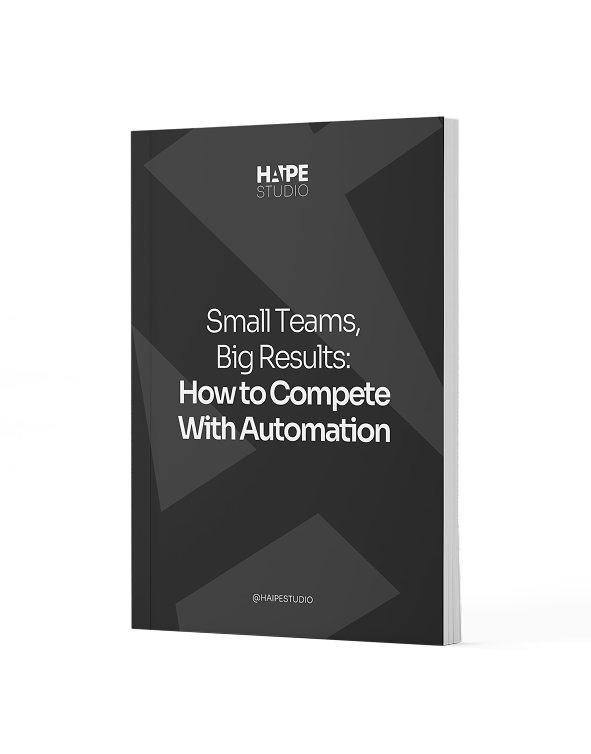
Small Teams, Big Results: How to Compete With Automation
Discover how lean organizations use strategic automation to outperform competitors 10x their size.
Frequently Asked Questions
How often should I review my automation workflows?
A quick check weekly, a proper review monthly, and a full audit quarterly. The exact cadence depends on how critical the workflow is to your operations.
What is the most common reason automations break?
API changes and data structure shifts. Third-party tools update regularly, and even a small field name change can break a workflow that was running perfectly for months.
How do I calculate automation ROI?
Time saved per week × your team’s hourly cost. Add in error reduction value and speed improvements, then compare the total to what you paid for implementation. Well-designed automations typically pay for themselves within 30–60 days.
When should I scale an automation?
When a workflow has run without issues for 60+ days, the ROI is documented, your team has stopped thinking about that process, and the same problem exists in an adjacent area of the business.
What happens if the person who built our automation leaves?
This is a real risk and it happens more than people expect. The answer is documentation: keep a short record of what each workflow does, who owns it, and when it was last reviewed. If that documentation is missing, start by walking through the workflow live and writing down what you observe.